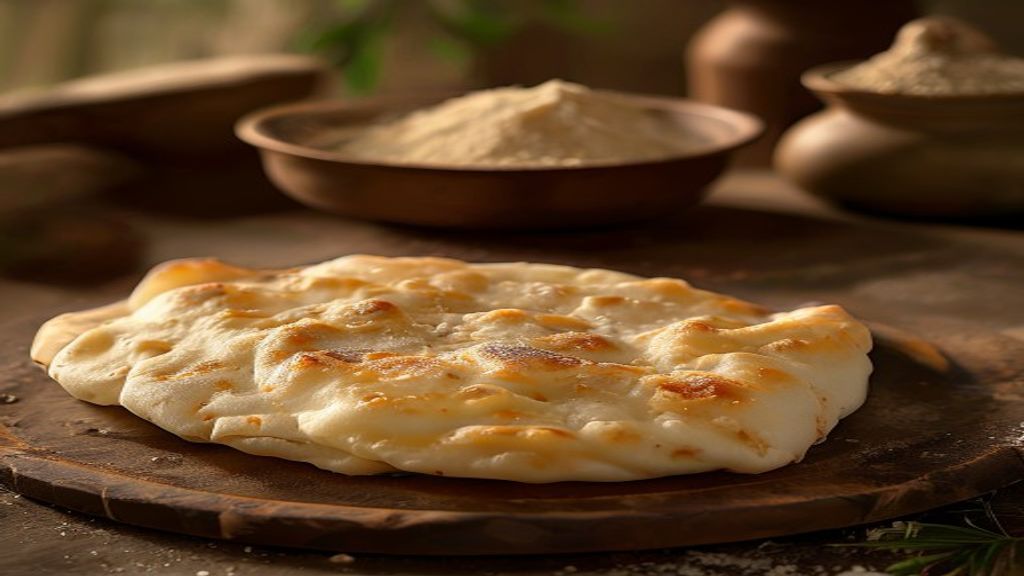
In kitchens across India, atta isn't just flour; it's the very soul of a meal. From fluffy rotis and crisp parathas to wholesome breads, it’s the foundation of countless traditions and daily nourishment. But have you ever paused to consider how your atta is made? The answer profoundly shapes its taste, its texture, and most importantly, its ability to truly nourish you.
At NityaTattva, our journey for wholesome food begins on our organic farms in Mandsaur, Madhya Pradesh, where we cultivate robust wheat. But the story doesn't end in the fields. It continues to our traditional stone mill, or chakki, in Ratlam, where the magic of transforming grain into 'living' atta truly happens. This isn't just about grinding; it's about preserving a legacy of nutrition and authentic flavour.
The Heart of Indian Kitchens: Atta
Atta, or whole wheat flour, is a staple that deserves our attention. It's often taken for granted, yet it's one of the most vital ingredients in our daily diet. For generations, the process of making atta was a communal affair, where grains were slowly ground between heavy stones, often in homes or local mills. This traditional method respected the grain, keeping its natural goodness intact. It’s this very respect for the grain that NityaTattva strives to uphold, bringing you atta that carries the complete essence of the wheat.
When we speak of 'whole' wheat, we mean all three parts of the kernel: the bran, the germ, and the endosperm. Each plays a crucial role. The bran is the outer layer, packed with fibre, B vitamins, and minerals. The germ is the embryo, rich in healthy fats, B vitamins, and Vitamin E. The endosperm is the largest part, primarily starch, providing energy. The balance of these three components is what makes whole wheat so nutritious.
The Slow Dance of the Chakki: Stone Milling Explained
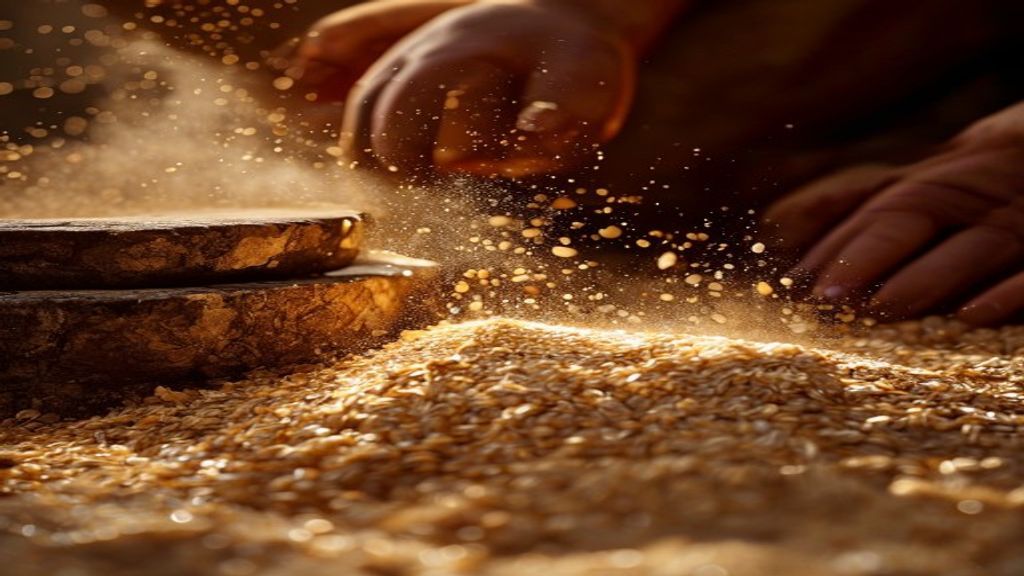
Imagine two large, circular stones, one rotating slowly over the other. This is a chakki, and it's been the heart of atta production for centuries. Our NityaTattva atta is born from this very process in Ratlam, where carefully selected organic wheat from Mandsaur meets these traditional stones. The process is a slow dance, not a race.
Here’s why this slow grind matters:
Low Heat Preservation: As the wheat grains pass between the stones, they are gently crushed and ground. Crucially, this traditional method generates very little heat. Why is this important? Because excessive heat, often a byproduct of high-speed industrial milling, can destroy delicate nutrients. The healthy oils in the wheat germ, vital B vitamins, and sensitive enzymes are preserved when the milling process remains cool.
Whole Grain Integrity: Unlike modern methods that often separate and then 'reconstitute' parts of the grain, stone milling ensures that the bran, germ, and endosperm are ground together into a unified flour. This means every particle of NityaTattva atta contains the complete spectrum of fibre, protein, vitamins, minerals, and healthy fats that nature intended.
Enhanced Digestibility: The intact fibre in stone-milled atta acts as a natural prebiotic, supporting a healthy gut microbiome. This fibre also aids in slower digestion, preventing sudden spikes in blood sugar and promoting a feeling of fullness. The natural enzymes preserved in the flour further assist the body's digestive processes, making the nutrients more accessible.
Richer Flavour and Aroma: When the grain is gently crushed, its natural oils and aromatic compounds are released and thoroughly mixed into the flour. This results in an atta with a distinct, earthy aroma and a robust, nutty flavour that you can genuinely taste in your rotis. It’s a taste that speaks of the soil, the sun, and the careful hands that nurtured the grain.
Beyond White: What Roller Milling Leaves Behind
Now, let's contrast this with the predominant method in commercial flour production: roller milling. This industrial process is designed for speed and efficiency, using high-speed steel rollers to separate the wheat kernel's components. The bran and germ are often removed, leaving behind primarily the endosperm.
Why this separation? For longer shelf life. The healthy fats in the germ can turn rancid over time, so removing them extends the product's viability for mass distribution. However, this comes at a significant nutritional cost:
- Loss of Fibre: A major portion of dietary fibre is in the bran, which is stripped away.
- Depleted Nutrients: The germ, a powerhouse of B vitamins, Vitamin E, and essential fatty acids, is also discarded. What's left is mostly starch, often 'enriched' with synthetic vitamins to compensate for what was naturally present.
- Impact on Blood Sugar: Without the moderating effect of fibre and other whole-grain components, roller-milled flour can lead to quicker digestion and more pronounced blood sugar spikes.
- Milder Flavour: The absence of the germ and bran means a less complex flavour profile, often requiring more effort to achieve depth in cooking.
NityaTattva's Promise: Freshness from Ratlam to Bangalore
At NityaTattva, our commitment is to bring you food that is honest, authentic, and genuinely nourishing. That's why we choose the slow, traditional path. Our stone-milling in Ratlam is not just a process; it's a philosophy. It ensures that the organic wheat, grown with care on our Mandsaur farms, retains its inherent goodness.
We mill in small batches, ensuring that the atta reaching your kitchen in Bangalore is always fresh. This isn't mass production; it's mindful creation. When you receive a pack of NityaTattva atta, you're not just getting flour; you're getting the complete, living grain, carefully preserved from our fields to your table. You're getting the integrity of a traditional method that respects nature's design.
Taste the Difference, Feel the Goodness
The difference in NityaTattva's stone-milled atta is palpable. You'll notice it in the earthy aroma when you open the pack, in the slightly coarser texture that makes for characterful rotis, and most importantly, in the sustained energy and satisfaction you feel after a meal. It's the taste of honesty, the feeling of nourishment that comes from food made with purpose.
Choosing NityaTattva's stone-milled atta is more than just a culinary preference; it's a choice for well-being. It's an embrace of traditional wisdom, a commitment to wholesome nutrition, and a celebration of authentic flavours. Experience the living grain, and let your kitchen rediscover the true essence of atta.